Sizable Energy has successfully completed a new experimental testing campaign at the Maritime Research Institute Netherlands (MARIN), further advancing the optimization of its offshore energy storage system.
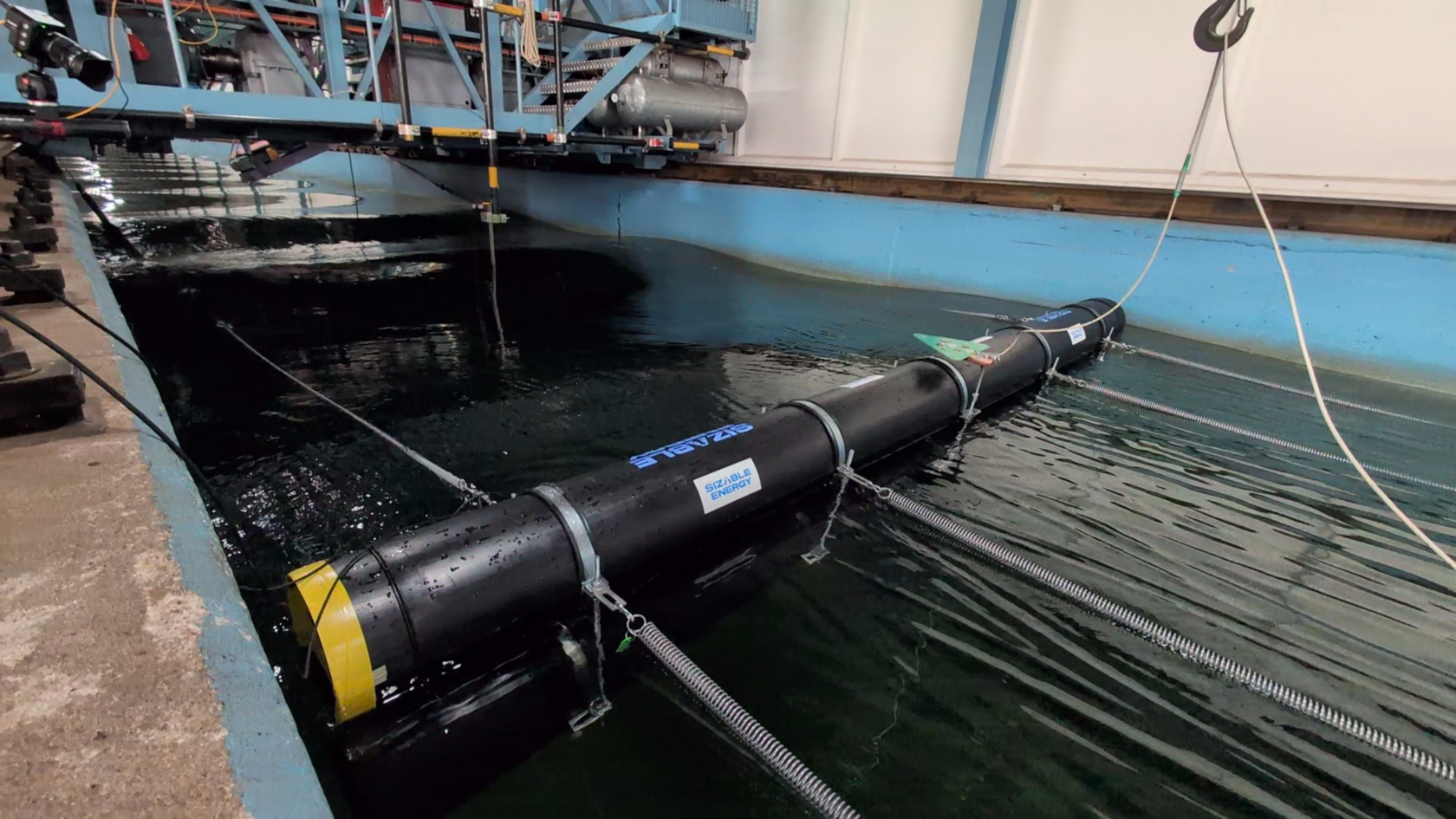
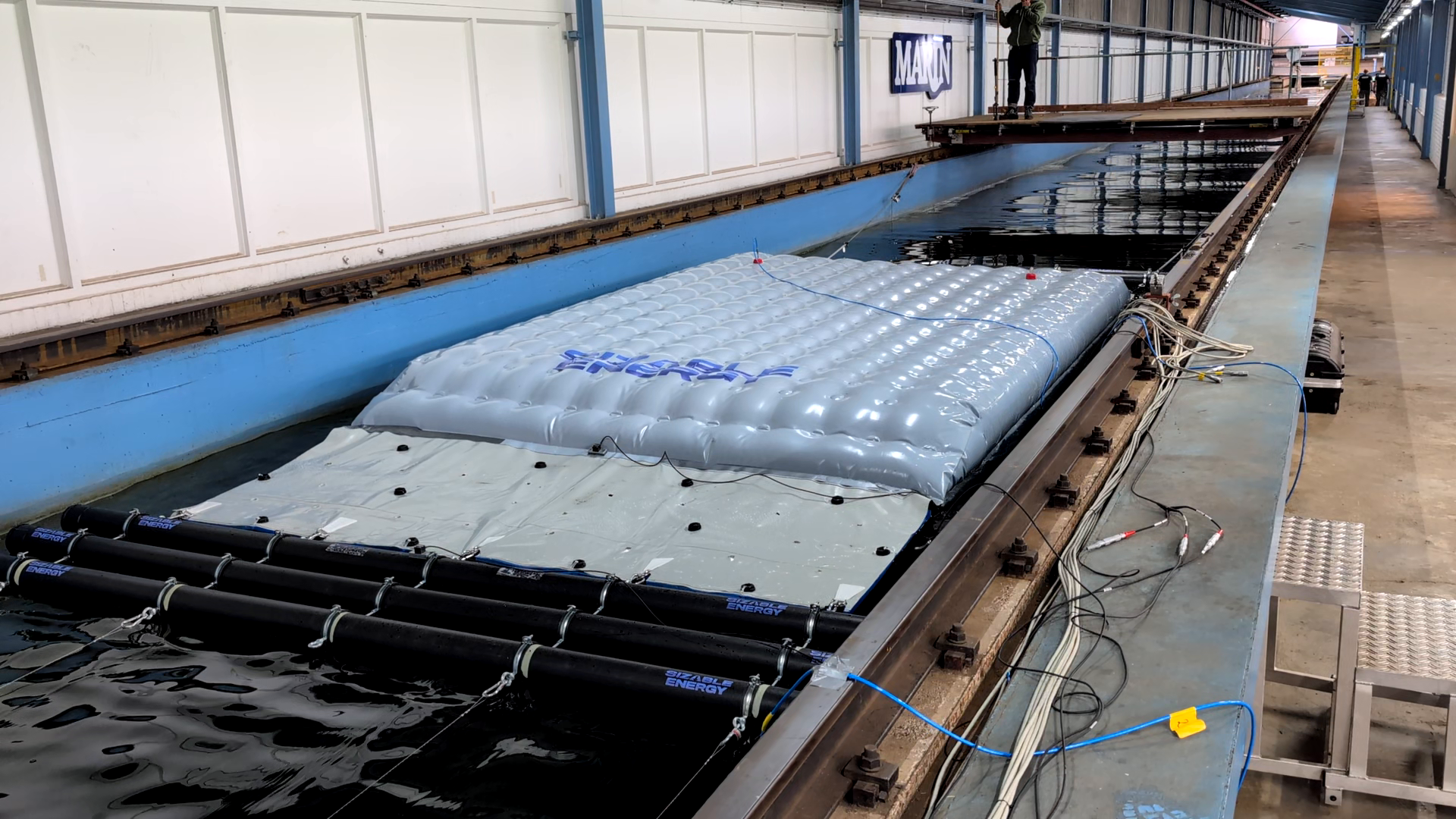
Conducted in April 2026, the campaign focused on refining the design and performance of the external breakwater barrier, a critical component in ensuring the system’s resilience under real-world sea conditions. The tests were performed in MARIN’s concept basin using a scaled section (2D) model, with the breakwater assembled alongside the upper reservoir section to accurately capture the hydrodynamic interactions between the two structures.
The experimental program evaluated the system’s response across multiple configurations. By adjusting internal ballast levels and mooring spring stiffness, the team assessed performance under a wide range of wave conditions, including White Noise, Regular Waves, and JONSWAP spectra. This approach enabled a comprehensive understanding of how the combined system behaves under both operational and extreme scenarios.
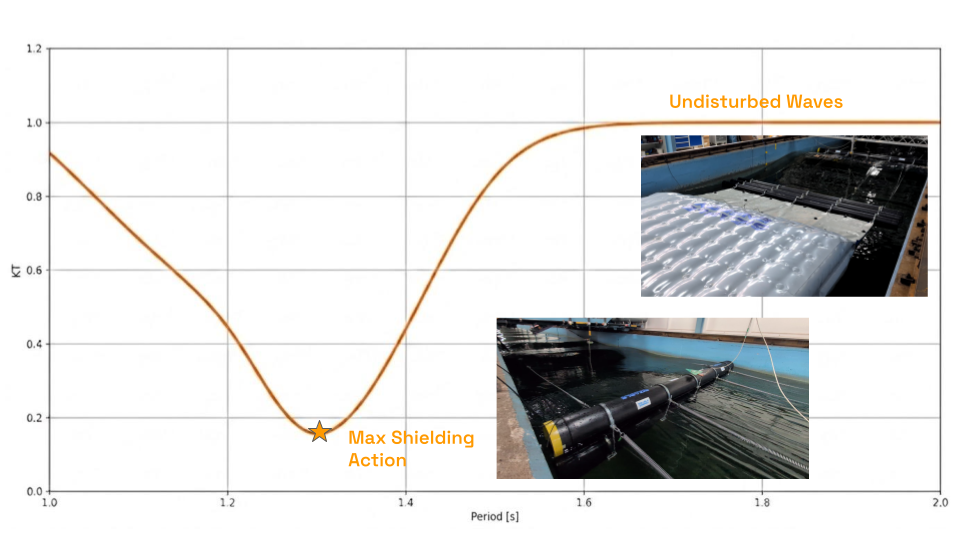
A key focus of the campaign was the measurement of the wave transmission coefficient across varying frequencies, providing critical data to validate the effectiveness of the breakwater in reducing wave energy impact on the reservoir.
In simple terms, the KT coefficient tells us how much wave energy passes from one point to another. It is calculated directly from the wave heights recorded by an Upstream Probe (placed in front of the barrier) and a Downstream Probe (placed behind the barrier). By finding the ratio between the wave height after the barrier and the wave height before it, we determine the KT value and can instantly understand how the external barrier works:
Conducted in April 2026, the campaign focused on refining the design and performance of the external breakwater barrier, a critical component in ensuring the system’s resilience under real-world sea conditions. The tests were performed in MARIN’s concept basin using a scaled section (2D) model, with the breakwater assembled alongside the upper reservoir section to accurately capture the hydrodynamic interactions between the two structures.
The experimental program evaluated the system’s response across multiple configurations. By adjusting internal ballast levels and mooring spring stiffness, the team assessed performance under a wide range of wave conditions, including White Noise, Regular Waves, and JONSWAP spectra. This approach enabled a comprehensive understanding of how the combined system behaves under both operational and extreme scenarios.
A key focus of the campaign was the measurement of the wave transmission coefficient across varying frequencies, providing critical data to validate the effectiveness of the breakwater in reducing wave energy impact on the reservoir.
In simple terms, the KT coefficient tells us how much wave energy passes from one point to another. It is calculated directly from the wave heights recorded by an Upstream Probe (placed in front of the barrier) and a Downstream Probe (placed behind the barrier). By finding the ratio between the wave height after the barrier and the wave height before it, we determine the KT value and can instantly understand how the external barrier works:
- KT ≈ 1: The wave passes through almost completely untouched. The breakwater is having little to no effect.
- KT ≈ 0: The wave is completely blocked or reflected.
- KT between 0 and 0.7: This indicates significant attenuation.
The results offer valuable insights for further design optimization, contributing to improved system stability and performance offshore.
This testing campaign represents another important step in Sizable Energy’s development roadmap, strengthening the technical foundation of the system ahead of future deployment phases.
Sizable Energy extends its sincere thanks to the MARIN team for their technical collaboration and support throughout the campaign.
This testing campaign represents another important step in Sizable Energy’s development roadmap, strengthening the technical foundation of the system ahead of future deployment phases.
Sizable Energy extends its sincere thanks to the MARIN team for their technical collaboration and support throughout the campaign.